
Defining what Full-Service Event Production actually means
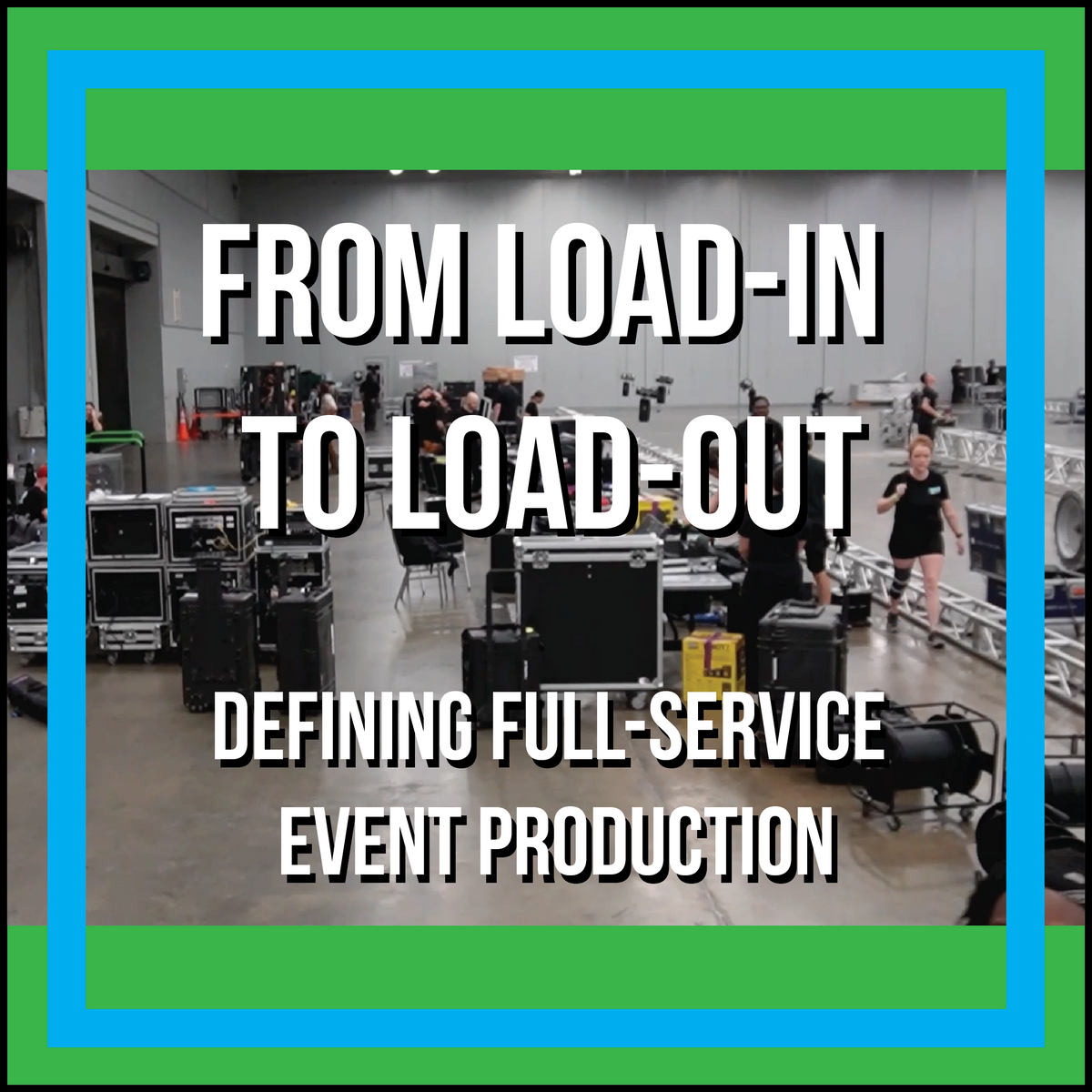
From Load-In to Load-Out
Richard Nava
If you've ever attended a flawlessly produced corporate event, a high-energy concert, or a polished awards gala and thought "how does all of this come together?"
You're not alone.
From the audience's perspective, great event production is invisible. Everything just works. The sound is clear, the lighting is dramatic, the stage looks incredible, and the show runs on time.
What the audience doesn't see is the weeks of planning, the hours of physical labor, and the team of skilled professionals working behind the scenes to make every second of that experience possible.
We talked with our co-founder and Director of Operations West, Collin Styles, to get an inside look on what full-service live event production actually looks like, from the first site survey to the final truck out the door.
Phase 1: Pre-Production — Where Great Events Are Really Built
The most important work in live event production happens long before a single cable is run or a truss is assembled. Pre-production is the planning phase that determines whether your event runs smoothly or scrambles to recover from preventable problems.
For TSV's production team, pre-production typically begins weeks, sometimes months, before show day. It starts with a thorough site survey of the venue, where our Technical Directors assess the space for critical factors like ceiling height, power availability, load-bearing capacity for rigging, acoustic characteristics, sightlines, and any structural considerations that will affect the production design.
From there, our team develops a full production design - mapping out LED wall placement, lighting rigs, audio system layout, camera positions, scenic elements, and signal flow. This design becomes the technical blueprint for the entire event, ensuring that every department is aligned before anyone sets foot on the show floor.
For events with performers, speakers, or broadcast components, technical riders are reviewed and accommodated during this phase. A technical rider outlines the specific requirements of an artist or presenter (input lists, monitor mixes, lighting preferences, video playback needs, etc) and reconciling those requirements with the venue and production design early prevents costly surprises on show day.
Pre-production is where experienced event production companies earn their value. The planning work that happens in this phase is what separates a smooth, professional event from one that's constantly firefighting.
Key pre-production deliverables include:
Venue site survey and production assessment
Full production design and technical drawings
Equipment lists and logistics planning
Technical rider review and accommodation
Crew scheduling and travel coordination
Vendor and venue communication
Collin, what's the biggest mistake you see event planners make when they underestimate the pre-production phase?
Collin: You have to strike a careful balance between constantly planning for the worst-case scenario, and being overly optimistic. Neither serve the event - if you’re engaged in worst-case thinking at all times, then you miss a lot of opportunities to push the envelope in terms of what’s possible in a production.
But if you always assume the best possible set of circumstances, then you can be derailed by a tiny bit of grit in the gears. You never know when the hotel’s freight elevator might break down, adding a couple of hours to the load in. If that’s going to kill your schedule, then you’ve made it all too tight. So I’ve worked with event planners who go to both.
What about the site survey? What's an example of a challenge your team uncovered during a site survey that fundamentally changed the production design?
Collin: The biggest ones are always around dimensions. "Can a 53’ truck really fit in the loading dock?" I know the venue says there are 20’ ceilings in the ballroom, but does that account for soffits, chandeliers, airwall tracks, etc.
There have been many times where we planned to put something in a ballroom, only to find that the venue’s published dimensions were out of date, or incorrect. Much better to find out about those things a few months ahead of the event, instead of the morning of load in!