
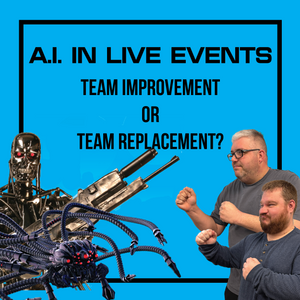
AI in Live Event Production: Team Improvement or Team Replacement?
The live events industry is no stranger to technological evolution. We went from analog to digital, SD to HD, manual operation to automation and pre-programming — everything in audio, video, and lighting has been through the tech gauntlet at some point.
AI is the next chapter, and there's no escaping it. But does that mean it will replace an entire event-production team?
Every industry is facing that fear right now.
Block, a fintech company, recently underwent mass layoffs — cutting roughly 40% of its workforce. CEO Jack Dorsey cited productivity gains from AI tools, stating the company could now operate with far fewer human workers. They aren't alone. Amazon, Accenture, Goldman Sachs, and dozens of other companies have partly or directly attributed AI as a driver behind significant workforce reductions. There’s a good chance you, dear reader, personally knows someone whose job has been affected by AI.
So the question is fair: if entire corporate teams are being replaced by AI, does the same fate await live event production crews?
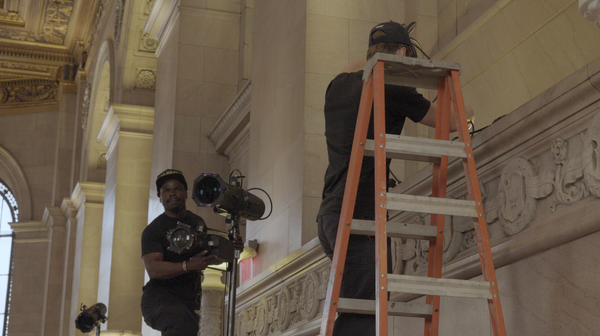
What Does an Events Team Actually Look Like?
For an average mid-sized ballroom event — roughly a $100,000 budget — a production team spans about 15 people. That includes:
Crew Leads: Production Manager, Technical Director, Show Caller
Audio Crew: Audio Engineers, Audio Technicians
Video Crew: Video Engineers, Graphics Ops, Camera Ops
LED Engineers
Lighting Crew: Lighting Designers, Lighting Assists
Load In/Out Crews
That daily labor is baked into the $100,000 alongside equipment, crew travel, housing, and logistics.
It's easy to see why an AI enthusiast might say, "If AI replaces this team, does my $100,000 event suddenly cost $50,000?" It's a reasonable question. But it's not that simple.
The Crew That Builds the Show
Let's start with Stagehands. In its current state, AI is nowhere near capable of doing what a stage crew does — building 114-plus panel LED walls, running cabling for audio , video, and lighting consoles, and camera systems, assembling lighting rigs and truss structures. We've seen AI-driven forklifts sorting packages in Amazon warehouses, but that's a far cry from constructing a full production environment from the ground up.
Let's face it: An experienced, knowledgeable stage crew simply cannot be replaced by technology.
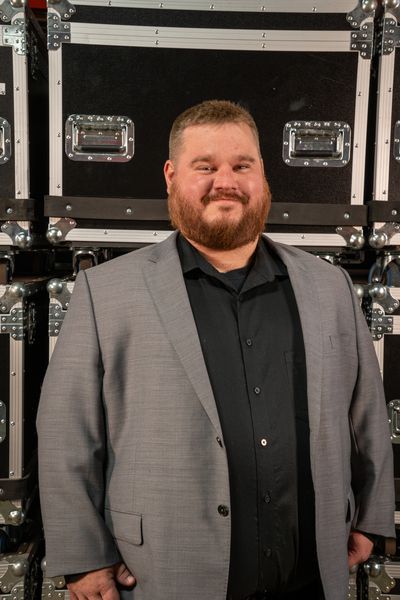
Kevin Hayden
Head of Audio
AI in Audio: Helpful, But Not Ready to Run the Show
To get a real perspective on AI in live audio, we spoke with our Head of Audio, Kevin Hayden:
Kevin: "I haven't found a good way to implement AI in live event audio. Yet.
There are several AI plugins worth watching — one being DeFeedbackAI. I played with the demo, and yes, it did its job very well.
To eliminate feedback manually, you need to induce feedback, analyze the EQ, and pull back the frequencies that are ‘ringing out’ so the microphone can be pushed louder without issues.
That process takes at least 15 minutes — but depending on the number of mics, the complexity of the sound system, and the size of the room, it can take an hour or more. With DeFeedbackAI, it could be nearly automatic. I think it has a real future as standard operating procedure, but I'm not ready to call it yet. Ask me again in 2 weeks after I use it on this next show.
At this point, there are too many moving parts and variables for AI to actually replace audio techs on a live show. While I can see it helping and making certain processes more efficient, I'm also concerned it could make audio engineers worse over time. If engineers rely on AI to handle the fundamentals, they may never develop — or eventually lose — the core skills - then if that plugin becomes unavailable, they're sh*t out of luck and now can’t operate a show."
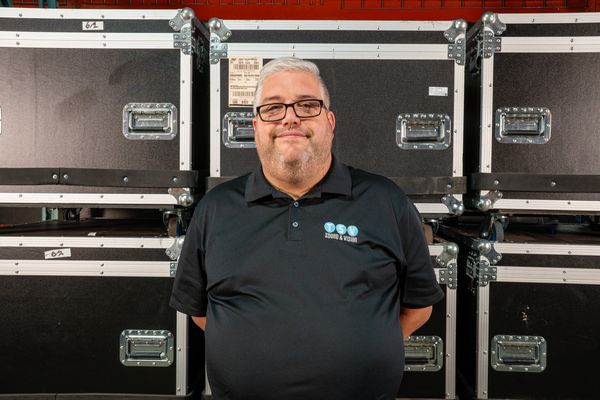
Rob Burgess
Production Manager and Technical Director
AI in Cameras and Lighting: Automation Assists, Humans Decide
We also sat down with award-winning Production Manager and Technical Director Rob Burgess to get his take on AI's role in cameras and lighting:
Rob: "AI is definitely helping with automation, but these positions still need a human operator behind the console or camera.
In cameras, we do see AI tracking coming up, but unless you have a million-dollar-plus budget, it tends to be clunky — and a skilled camera operator will outperform it every time. TSV sometimes uses robo-cams that allow a single video operator to control multiple cameras simultaneously, but it still requires that video operator to be there, making real-time decisions.
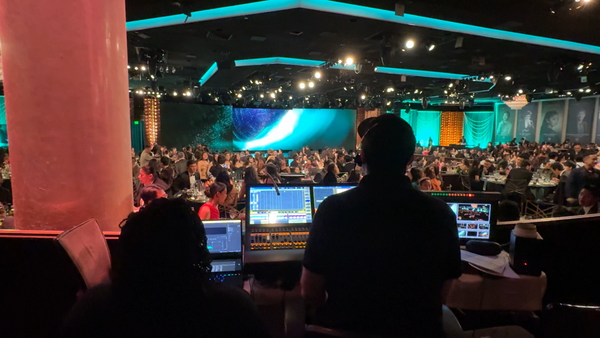
Lighting is even further removed from AI. It's incredibly dynamic — it requires precision timing layered on top of a deep understanding of the room, the subject, and the stage.
Lighting software and consoles have improved dramatically, helping directors preprogram cues and looks, but from my experience, fully replacing a Lighting Director or Technical Director (TD) with AI is near impossible.
As a TD, I'm both a project manager and a client relationship manager. I keep pre-production moving — making sure equipment is quality controlled, staffing is locked, and logistics are on track — while also making sure the client's vision is actually being realized on the day.
Do I use AI tools to help draft emails or research something quickly? Of course! But delivering a successful live event requires human knowledge, human experience, and a human on the show site."
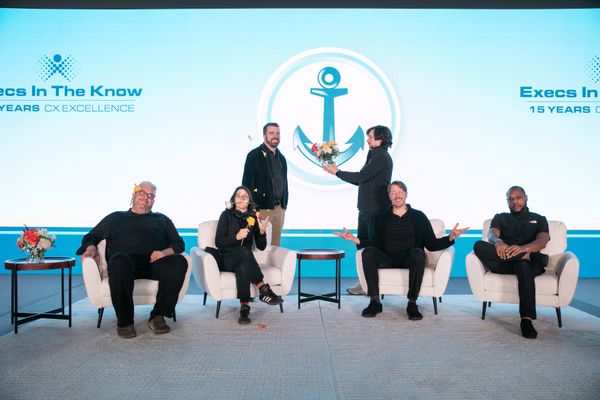
Execs in the Know 2026 Production Team
From left to right: Rob, Shannon, Chris, Peter, Josh, Chris J
Every Area of Events Needs People
Events exist to bring people together — for information, entertainment, and genuine human connection. They are dynamic and energetic by nature, not robotic or templated. No two shows are the same, and that variability is exactly why human expertise remains essential at every level of production. From the Technical Director calling the show to the stagehand making last-minute adjustments, the human element is what makes an event truly successful.
TSV is a proud team of human professionals who are genuinely passionate about live events — the kind of people who geek out over why the grandMA3 is the right lighting console for one show and not another, or who relish the challenge of designing an LED wall to fit a non-traditional stage shape.
Have an upcoming event in mind? Give us a call. We'd love to talk through it and be your team — and don't worry, you won't be greeted by a chatbot, it’ll probably be Collin or Joel.
This blog post was written by a human, with Claude assisting in grammar and formatting.